


ABOUT US
Limestone Landscapes of the Great Northern Peninsula
The Great Northern Peninsula is a unique land feature of Newfoundland and Labrador that contains a mosaic of habitat types including limestone barrens, wetlands, coastal shores, highlands, and forests. This long and narrow peninsula extends 270 km in a mostly North to South orientation and, due to its proximity to the Labrador Current, experiences some of the coolest temperatures and longest winters of insular Newfoundland. The people, plants and animals found here are quite resilient and this can be seen throughout the entirety of the peninsula. From the twisted, bent, but unbroken tuckamore, to the lone Long’s Braya seemingly growing from barren rock, to the weathered fishing stores on exposed cobble shores and the well-tended vegetable gardens on the margins of peatlands, we see how life persists in even the most challenging environments.
A Priority Place for Species at Risk in Canada
In 2024, the Government of Newfoundland and Labrador and the Government of Canada recognized the importance and uniqueness of the Limestone Landscapes of the Great Northern Peninsula and officially designated the area as a Priority Place. This designation was based on the high biodiversity of this landscape as well as the high number of at-risk species that persist in the different ecosystems. In fact, two species of extremely rare plants are only found within a small geographic range of the Limestone Barrens. These two species of Braya – Long’s Braya and Fernald’s Braya – are endemic to Newfoundland, which means they are not found anywhere else in the world. Currently, both species are listed as endangered under federal and provincial species at risk legislation.


Working Together: The Team
Priority Places are collaborative initiatives. The Government of Canada, Government of Newfoundland and Labrador, First Nations, non-governmental organizations, academic institutions, community members and other partners have formed a Limestone Landscapes of the Great Northern Peninsula Priority Place Core Team to coordinate and collaborate on the identification and implementation of on-the-ground conservation and recovery actions to benefit the habitats and species in the limestone landscapes. See list of partners here.
Our Vision Statement
Rare species and biodiversity are thriving in healthy limestone landscapes and are widely celebrated and cared for by local communities and supported by a network of dedicated partners
An Area of High and Unique Biodiversity
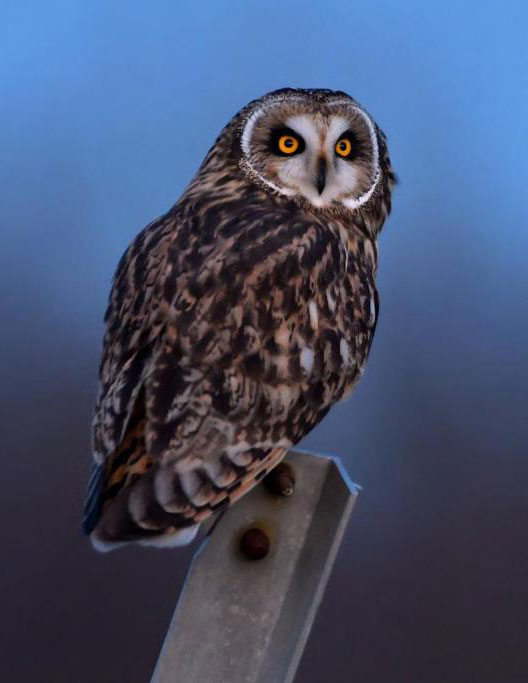
There are a total of 36 species that reside in the Limestone Landscape that have been listed and are protected under federal and provincial at-risk legislation. A number of these are rare plant species with sparse and spatially separated populations within limited geographic areas. They generally require very specific soil and weather conditions to thrive, which means that human-induced climactic changes in these conditions and degradation or disturbance of soils threaten the persistence of these populations. Some bird species such as the threatened Short-Eared Owl, build their nests and hunt across the Limestone Landscapes, while others, such as the endangered Red Knot, utilize the coastal shores as a stopping and feeding ground as they migrate. Another very rare and beautiful endemic Newfoundland plant, Barrens Willow, is only found along 30-km of coastline near Cape Norman. This low-lying shrub produces stout catkins that are covered in numerous purplish red hairs (stamens) during flowering. Due to the small population size and extremely restricted geographic range, Barrens Willow has been listed as endangered and faces pressure from the degradation and loss of habitat.
This Special Place Needs Our Help
These limestone landscapes and their species at risk are under pressure from a variety of small to large scale impacts. Many of our rare Limestone Barrens plants are damaged and killed by off-road vehicles traveling across the landscape, commercial and non-commercial quarrying of limestone gravel, and other human activities. We must do our part to help protect these species at risk. The establishment of the Limestone Landscape Priority Place and the efforts of all community members will help conserve these special ecosystems and their at-risk species.